




— PropTech / Automatisierung —
CAVOR Desk
Ein Ticketsystem für die Instandhaltung in Wohnungseigentümergemeinschaften. Mein eigenes Produkt – ein MVP, das mit dem ersten Kunden im Einsatz ist.
Für wen und warum
Meldungen aus den Gebäuden liefen über WhatsApp, Trello und Google Sheets – Werkzeuge, die nicht für die Verwaltung von Immobilien gedacht sind. Ich kenne das aus eigener Arbeit: Ich war selbst Techniker und habe selbst Meldungen verloren. Daher die Kette, die das System von Anfang bis Ende abdeckt: Bewohner → Verwaltung → Techniker, damit nichts herausfällt. CAVOR ist eine Marke und ein Produkt von Veles Digital.
Was ich gebaut habe
Ich habe das Ticketsystem gebaut: Meldung per QR-Code ohne Konto, ein mobiles Panel für den Techniker und eine vollständige Reparaturhistorie. Es ist mein eigenes Produkt, keine Kundenarbeit.
Lösungen
- QR-Meldungen (ohne Konto)
- Ein Bewohner meldet eine Störung, indem er einen QR-Code scannt – ohne Konto, ohne Anmeldung. Die Codes hängen in den Treppenhäusern, die Hausverwaltung druckt sie aus.
- Mobiles Techniker-Panel
- Der Techniker arbeitet in einem Panel, das für das Smartphone gebaut ist: Er ändert den Status, ergänzt Fotos und Notizen und markiert das Ticket – zum Beispiel, wenn ein anderes Gewerk benötigt wird.
- Status-Updates in Echtzeit
- Bei jeder Statusänderung geht eine E-Mail an die Person, die die Störung gemeldet hat.
Stack
Next.js 15, Supabase, TypeScript, Tailwind. Der Bewohner arbeitet ohne Konto, daher melden sich nur die beiden anderen Seiten an – über Supabase Auth, und einer Organisation kann man ausschließlich per Einladungscode beitreten.
Ergebnis
Das Produkt ist im Einsatz und hat seinen ersten zahlenden Kunden. Ich nenne ihn nicht – der Kunde hat der Veröffentlichung nicht zugestimmt. Das MVP-Stadium soll es bis Ende 2026 verlassen.
Das Produkt
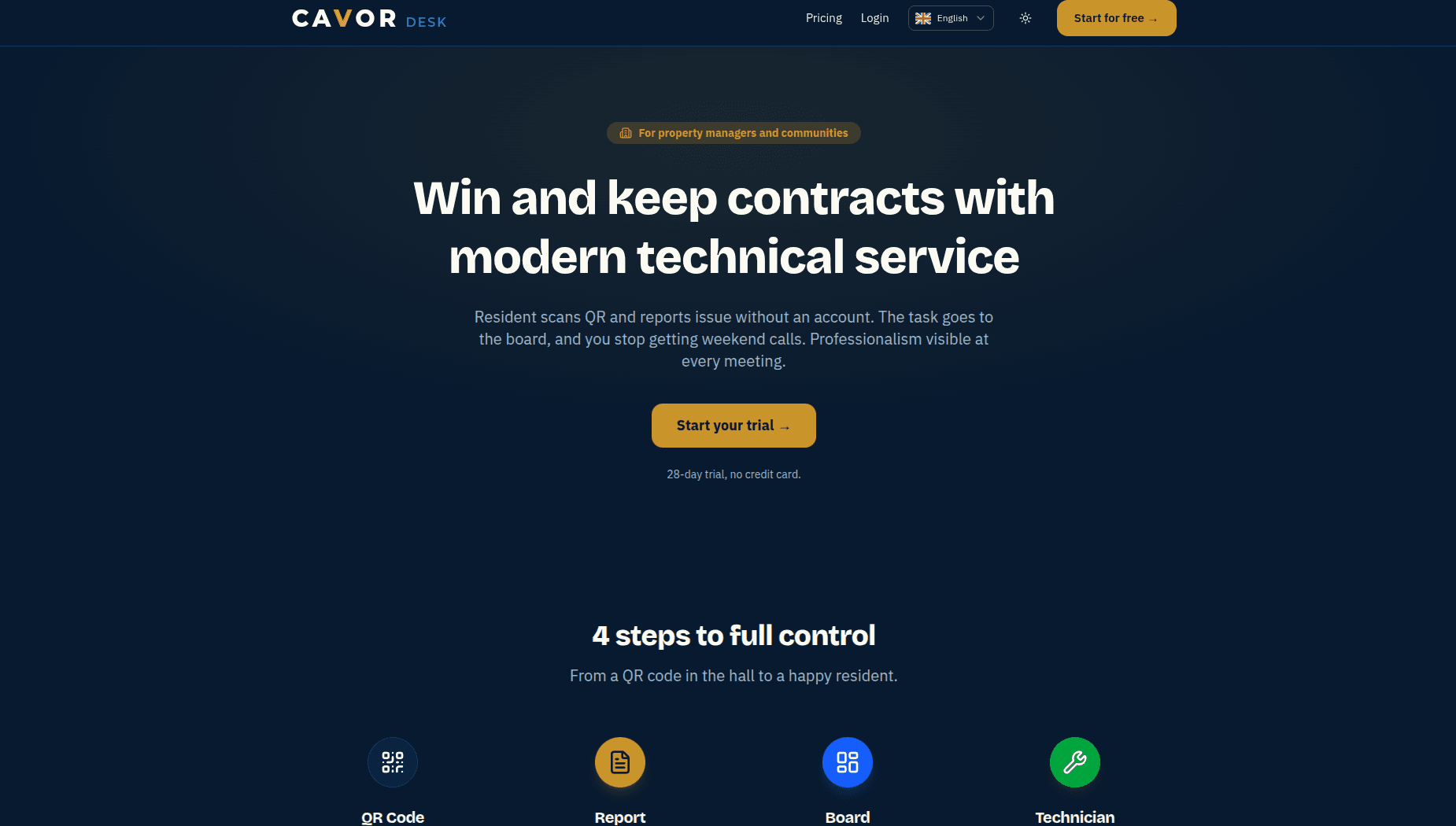
Der Zugang erfolgt per Einladung – man tritt einer Organisation mit einem Code bei, hinter dem Link wartet also eine Anmeldeseite. Wenn Sie das Produkt von innen sehen möchten, schreiben Sie mir: Kontakt
Produkt ansehen