




— PropTech / Automation —
CAVOR Desk
A maintenance ticketing system for residential communities. My own product — an MVP deployed with its first client.
Who it is for, and why
Tickets from buildings travelled over WhatsApp, Trello and Google Sheets — tools that are not for managing property. I know it from my own work: I was a technician myself, and I lost tickets myself. Hence the chain the system covers end to end: Resident → Administration → Technician, so that nothing drops out of it. CAVOR is a brand and a product of Veles Digital.
What I built
I built the ticketing system: reporting through a QR code with no account, a mobile panel for the technician, and full repair history. It is my own product, not client work.
Solutions
- QR reporting (no account)
- A resident reports a fault by scanning a QR code — no account, no sign-in. The codes hang in the stairwells and the property manager prints them.
- Mobile technician panel
- The technician works in a panel built for a phone: changes the status, adds photos and notes, and tags the ticket — that another trade is needed, for instance.
- Real-time status updates
- A status change sends an email to whoever reported the fault.
Stack
Next.js 15, Supabase, TypeScript, Tailwind. The resident works without an account, so only the other two sides sign in — through Supabase Auth, and an organisation cannot be joined any way other than by invitation code.
Outcome
The product is deployed and has its first paying client. I'm not naming them — the client hasn't agreed to publication. It is due to leave MVP by the end of 2026.
The product
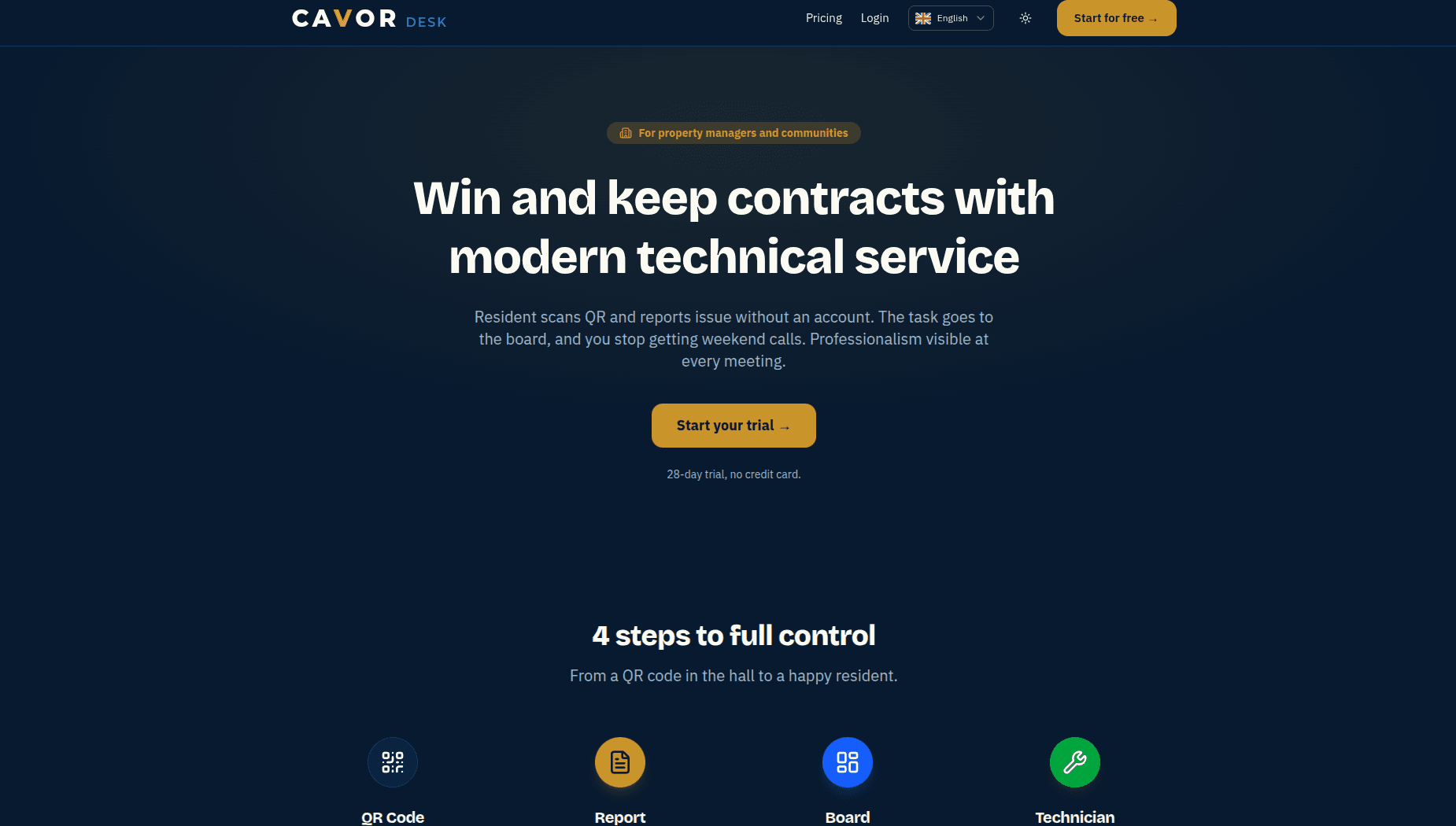
Access is by invitation — an organisation is joined with a code, so a sign-in screen is what waits behind the link. To see the product from the inside, write to me: Contact
View product